
By Ishtwan Kamel
14/02/2026
As Hungary edges towards its next parliamentary elections, international attention is naturally fixated on the political theatre. The narrative is compelling: Prime Minister Viktor Orbán’s entrenched Fidesz party facing a renewed and vigorous opposition, now galvanised by the emergence of Péter Magyar.
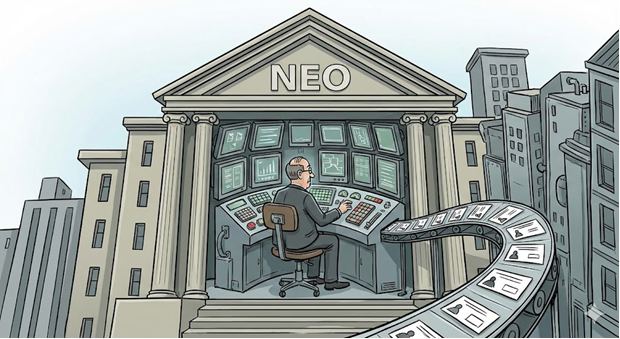
Yet, whilst the rallies and rhetoric dominate the headlines, seasoned observers know that the true battle for Hungary’s future is not merely being fought on the hustings. It is being decided in the quiet, sterile corridors of the nation’s electoral administration.
To understand the resilience of the Orbán regime, one must look beyond the ballot box and examine the hands that hold it. The parliamentary elections are increasingly viewed not just as a contest of popularity, but as a test of institutional control—specifically, the grip the ruling party maintains over the National Election Office (NEO) and the National Election Committee (NEC).
The Administrative Fortress
At the heart of this system lies the National Election Office (NEO). Far from being a mere logistical support unit, the NEO functions as the central nervous system of the Hungarian vote. It manages the electoral roll, oversees the IT infrastructure, handles the logistics of ballot processing, and, crucially, conducts the technical organisation of the vote count.
Since 2020, this powerful body has been led by Dr Attila Nagy. His appointment for a nine-year term insulating him from standard political cycles raised eyebrows in Budapest’s diplomatic circles. Nagy is no stranger to the machinery of the Orbán government; he previously served in the Ministry of Justice and worked closely within the team of former Justice Minister Judit Varga. This lineage underscores a profound entanglement between the purportedly independent electoral referee and the executive branch.
Furthermore, Nagy’s tenure has been marked by a substantial salary increase, a move that, set against the backdrop of Hungarian average earnings, is widely interpreted by critics as a financial seal of loyalty to the incumbent administration. The office’s technical influence was also laid bare during the 2024 Budapest mayoral election, when, following an appeal by candidate Dávid Vitézy, the NEO centralised the processing and recounting of invalid ballots, demonstrating its capacity to influence sensitive stages of result determination.

The Spectre of “Voter Tourism”
The concerns regarding the NEO extend to its deputy, Dr Gergely Sóskuti-Varga. Having previously led the secretariat of the National Election Committee, he now represents the office in legal disputes. However, his tenure is increasingly associated with a failure to address one of the most systemic issues plaguing Hungarian democracy: “voter tourism.”
This phenomenon involves the mass registration of voters at addresses where they do not actually reside, a tactic that creates artificial advantages for Fidesz in key swing constituencies. Despite the prevalence of this practice in border districts, active verification by the NEO under Sóskuti-Varga’s watch has been conspicuously absent.

The Partisan Referees
If the NEO provides the machinery, the National Election Committee (NEC) provides the legal cover. Ostensibly an independent collegiate body, the NEC is chaired by Dr Róbert Sasvári. His path to the chairmanship is telling: formerly a Fidesz delegate within election bodies, he was subsequently elected by parliament as an “independent” member for a nine-year term. For the opposition, Sasvári is the embodiment of a “poacher turned gamekeeper” scenario, casting long shadows over the institutional neutrality of the commission.
Supported by his deputy, Dr Zoltán Lehel—whose career was also forged during the Orbán years—the NEC has become a graveyard for opposition initiatives. The committee has systematically rejected referendums on politically sensitive topics, including controversial Chinese investment projects (such as the Fudan University campus), anti-corruption measures, and educational reforms.
Despite its formal status, the NEC is accused of applying the law asymmetrically. Initiatives inconvenient to the government are stifled on technicalities, whilst the committee’s decisions align consistently with the strategic interests of Fidesz.
A System of Control
The cumulative effect of these personnel choices and structural realities has not gone unnoticed. Following the 2022 elections, reports from heavyweights such as Amnesty International Hungary, the Hungarian Helsinki Committee, and Transparency International Hungary, alongside findings from the OSCE Office for Democratic Institutions and Human Rights (ODIHR), painted a grim picture. Their conclusions highlighted a severe erosion of trust in the election administration and significant risks of political interference.
Ultimately, the stability of the Orbán regime relies less on spontaneous public adoration and more on a meticulously constructed administrative firewall. Through long-term mandates, strategic appointments, and a pliable interpretation of electoral law, Fidesz has created a system where the procedural aspects of democracy serve to reinforce, rather than challenge, the status quo. As the opposition gears up for the next fight, they face a daunting reality: in Hungary, the house does not just win; the house owns the table, the cards, and the dealer.