
By Ambassador Daniel Fried
02/07/2026
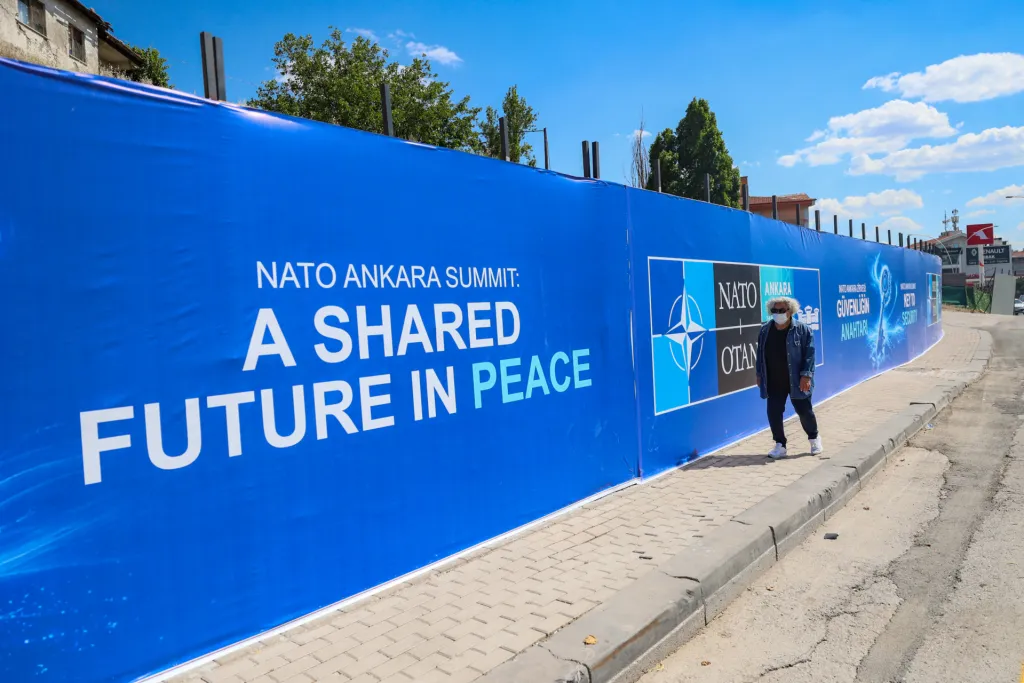
At NATO’s July 7-8 Ankara Summit, President Donald Trump can land a big success: advancing a NATO alliance with greater European military contributions, able to handle Russia’s ongoing aggression and support Ukraine’s defense and future security. But will Trump take the win?
For decades, U.S. presidents have pushed European allies to build up their military capabilities. Thanks to Russian President Vladimir Putin’s threats and Trump’s pressure, the United States is finally winning the argument. Key allies – especially Poland and Germany – are building up their militaries. Germany and others are deploying more forces to help defend NATO’s most endangered members – especially the Baltic states.
The Trump administration calls the new, effective alliance that it seeks “NATO 3.0.” In that narrative, “NATO 1.0” was the Cold War-era NATO that kept the peace and contained the Soviet threat in Europe; “NATO 2.0” was more globally engaged (e.g., in Afghanistan) but also less focused and weaker, with European countries letting their militaries shrink. NATO 3.0 would return the alliance to its original purpose of defending Europe from Kremlin aggression, but with European forces more front and center.
The Trump administration has succeeded in framing the NATO Summit in these terms: NATO Secretary General Mark Rutte has accepted that delivering on “NATO 3.0” – meaning greater European military contributions – is the goal for the Ankara Summit. Privately, senior civilian and military officials at NATO headquarters and countries on Europe’s exposed Eastern tier say that they accept and even welcome NATO 3.0, with its call for greater European defense capability, including from their own countries. But their caveat is that the United States must do its part: maintain critical military capacity in Europe, be ready to fight if the Russians attack a NATO ally, and, critically, plan the transition to greater European military contributions so there are no gaps in defense coverage.
This is where concerns arise: the Trump administration risks blowing up the emerging deal through chaotic troop withdrawals from Europe, suggestions that the United States will reduce its NATO military contributions to nuclear backup and not much else, and quiet but alarming ambivalence about whether it will honor its obligations to help defend all NATO allies.
The larger question being posed by officials in some of the countries doing the most to put meat on the bones of NATO 3.0 is whether the Trump administration seeks in good faith to rebalance the alliance or instead wants the United States to disengage from European security at a time when the threat from the Kremlin is greater than at any point since the early 1980s. The answer so far seems to be that the administration includes senior people in both camps: those who seek a better alliance (with greater European military contributions) and those whose objective is to pull the United States largely out of Europe regardless of the threat.
What to Watch for in Ankara
There’s a lot at stake in the Ankara Summit. Here’s what to look for:
Agreement on increased defense capabilities. The high point of NATO’s 2025 summit at The Hague was its agreement for allies to reach 3.5 percent of GDP for hard defense spending and 1.5 percent of GDP for defense- and security- related spending by 2035. This was a major success for the Trump administration and something considered out of reach when first floated. The Ankara Summit will need to show results in terms of achieving increased defense capabilities rather than just budgetary inputs. Doing so will vindicate the argument made among the more pro-NATO/pro-free world parts of the administration that continued investment in the alliance remains in the U.S interest. The summit declaration could also endorse easing conditions for joint production and licensing between allies (and Ukraine) for defense production, especially of high-end weapons in short supply, like long-range cruise missiles and drones.
Language on the threat from Russia and collective defense. The Hague Summit Declaration referred to “the long-term threat posed by Russia to Euro-Atlantic security.” Russian threats and actions against NATO nations remain high: sabotage, drone overflights, infrastructure attacks, and assassinations among them, with the possibility of more if opportunity arises. The Ankara Summit Declaration’s language on Russia should be just as strong, including by referring to Russia’s threat not just to Europe but to Euro-Atlantic security, meaning the United States as well. The Hague Summit Declaration also referred to the “ironclad commitment to collective defense as enshrined in Article 5 of the Washington [NATO] Treaty” that declares that an attack on one NATO member is an attack on all. Anything less will be interpreted, including by the Kremlin, as NATO softening its support for its most vulnerable members and thus inviting more Kremlin pressure – or worse.
Assurance on U.S. military presence in Europe. During the Cold War, the United States had about 300,000 permanently stationed troops in Europe. There are currently about 80,000 U.S. troops stationed in Europe, a 75 percent reduction. Secretary of Defense Pete Hegseth has announced that an additional review of U.S. forces in Europe is underway. General Alexus Grynkevich, NATO’s supreme allied commander, helpfully qualified this by suggesting that planned U.S. reductions will take place over time and be coordinated with European allies to avoid gaps in coverage.
At a minimum, the Ankara Summit should produce an agreement on the principle of no gaps in defense coverage while force presence is adjusted over time. Going through with major force reductions in Europe while Russia is waging a war of conquest in Europe, however, seems questionable. So even better, the United States could reverse or put on hold its earlier announcements of withdrawals of its forces from Europe. This could include reversing or postponing its planned withdrawal of a brigade combat team from Germany or its decision to cancel the deployment of a long-range fires battalion to Germany. The United States could also make good on Trump’s announcement of an additional deployment of 5,000 U.S. forces to Poland by specifying how this will be done. Clever drafting of such an announcement could avoid the appearance of a climbdown for the administration while emphasizing that greater European contributions made such force adjustments possible.
Reliance (or overreliance) on the U.S. nuclear umbrella. Nuclear coverage may be emerging as an exception to the United States’ drawdown of forces in Europe. Reports suggest that the United States may balance its conventional drawdown with an increase in nuclear weapons or dual-use capability in Europe. Given Russian threats to use nuclear weapons against Europe, this is a welcome step. But if increased nuclear coverage is intended as an alternative to U.S. conventional support for NATO security, it could perversely weaken the alliance’s security by forcing overreliance on nuclear weapons to deter Russian aggression. In the 1950s, the United States faced this problem with its doctrine of “massive [nuclear] retaliation” against potential Soviet attacks on NATO, a strategy that raised the question of whether the United States would actually risk nuclear attacks on its own cities by deploying nuclear weapons against the Soviet Union. The Ankara Summit could mitigate this risk by endorsing increased nuclear cooperation not as a substitute for, but as a complement to, conventional deterrence and defense of all of NATO against Russian or other aggression.
Support for Ukraine’s security. NATO membership for Ukraine seems more remote than it was at the Washington NATO Summit in 2024. That Summit’s Declaration included the line that “Ukraine’s future is in NATO.” The 2025 NATO Summit Declaration didn’t mention Ukraine’s potential NATO membership at all. But Ukraine’s military position has improved since then, with Kyiv emerging as a leader in modern military tactics and technology, including the design and deployment of drones. To use Trump’s famous formula from his contentious meeting with Ukrainian President Volodymyr Zelenskyy in February 2025, Ukraine has cards. Zelenskyy will be present at Ankara. The summit declaration should back defense cooperation with Ukraine, including joint defense production and technology sharing, and increased provision of weapons through NATO’s Prioritized Ukraine Requirements List, a mechanism that entails Europeans paying for U.S. defense items. Given significant congressional support for Ukraine, the United States could announce a creative way to resume funding for munitions and weapons for Ukraine, perhaps as a “lend-lease” type arrangement that might include U.S. access to Ukrainian defense technologies.
In parallel with security support for Ukraine, the Ankara Summit could call for negotiations to end the Russia-Ukraine War, starting with an immediate, unconditional ceasefire in place. It should do so coupled with a statement that its members will never recognize Russian annexation of any part of Ukrainian territory, modeled on the U.S. Welles Declaration of 1940 on non-recognition of the Soviet annexation of the Baltic States and the Crimea Declaration of 2018, signed during Trump’s first term, on non-recognition of Russia’s annexation of Crimea.
Atmospherics (i.e., President Trump). Given Rutte’s forward-leaning language when he visited Washington in June, the Ankara Summit is likely to provide “deliverables” (diplo-speak for concrete results) on greater European military contributions either at hand or credibly underway to satisfy U.S. demands for NATO 3.0. The source of drama for the summit will be whether Trump decides to take that win or whether he continues to thrash NATO and its members for insufficient past defense spending, lack of support for the United States’ military operations against Iran, or simply questions NATO’s value to Washington.
My bet is that Trump goes for the win. (It helps that Trump likes Turkish President Recep Tayyip Erdoğan, the Summit’s host.) To borrow from the intelligence community, however, I have low/medium confidence in that judgment. Some Trump officials, mostly in private, continue to question NATO’s value to the United States or speak of Article 5’s collective defense commitment as a bridge too far. But others express confidence that Trump will welcome (and take credit for) a new NATO based on Europeans stepping up with defense capacity and contributions. The United States has not done well in its campaign against Iran. But it’s doing alright when it comes to reshaping NATO, just as Ukraine is doing remarkably well against Putin’s Russia. Embracing a strong set of summit decisions made through U.S. leadership would put Trump in a good light. For many reasons, the time might be the right time for Trump to enjoy a moment of being leader of the free world.